Kremlin Strategically Weakening Ukraine and NATO
Over years into the war in Ukraine, Western narratives still frame the conflict as a military quagmire for Russia—an unwinnable war dragging on at immense cost. But this framing overlooks a deeper strategic calculus: the Kremlin may not be aiming for outright conquest of Ukraine. Instead, it is waging a deliberate war of attrition designed to demilitarize Ukraine and, indirectly, wear down NATO itself.
The West’s Misreading of the Kremlin’s Strategic Goals
The dominant Western belief—that Russia failed because it didn’t quickly topple Kyiv or seize the entire country—misses the point. From the Kremlin’s perspective, this war is about reshaping the security order on its western flank, not collecting territory. The goals of “demilitarization” of Ukraine have been consistent themes in the Kremlin’s messaging from day one. These terms are often dismissed as propaganda, yet in practical terms, they outline a grinding strategy: to drain Ukraine’s ability to defend itself and exhaust the Western military-industrial system sustaining it.
The Economic and Military Cost Asymmetry
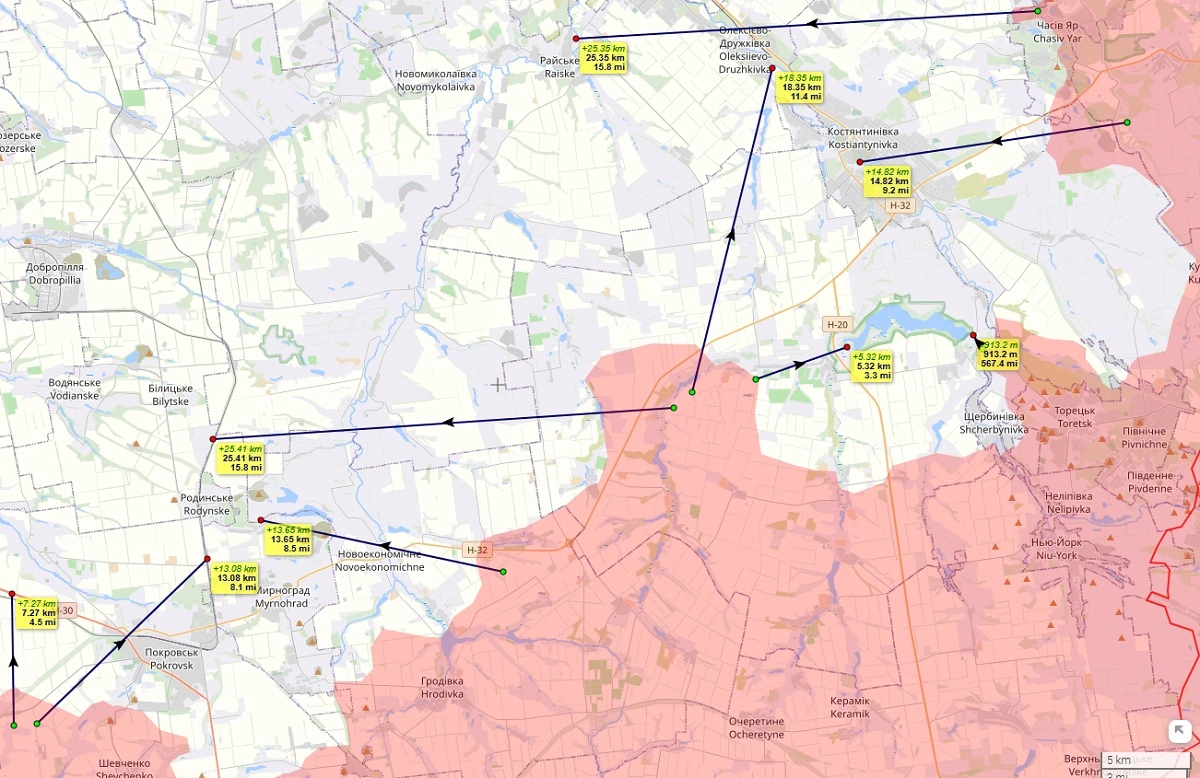
The battlefield reflects this approach. Russia is not trying to advance quickly; it’s trying to grind down. Ukraine’s armed forces—fighting bravely and skillfully—have become deeply reliant on the West for both weapons and finances. And this is precisely where the deeper conflict lies.
The scale of Western support has been unprecedented. The United States alone has committed more than $115 billion in combined military, economic, and humanitarian aid. But Europe, often perceived as lagging behind, has in fact mobilized immense resources. Germany has contributed more than €17–20 billion in military assistance, including Leopard 2 tanks and advanced air defense systems. France, initially slow, ramped up support to an estimated €5–7 billion, including SCALP missiles and Caesar howitzers. Poland has provided over €5 billion, driven by its own security concerns. The Netherlands, Sweden, and Denmark have each pledged billions, and even smaller nations like Estonia, Latvia, and the Czech Republic have led in aid per capita.
Combined, EU institutions and member states have likely spent over €100 billion, adding to the West’s total support. Despite this massive aid, Ukraine remains dependent—militarily, economically, and politically.
The Kremlin’s Strategic Use of Cheap Munitions
And this, arguably, is part of the Kremlin’s long game. Unlike NATO countries, where defense industries are driven by market profit, Russia’s arms production is state-owned and subsidized for war economy scaling.
The cost asymmetry extends starkly to tanks. A single U.S.-built M1A2 Abrams costs between $10 and $12 million, and requires a specialized M88 recovery vehicle—another $3 to $4 million—for battlefield extraction or repair. The German Leopard 2A6, widely used in Europe, costs $8 to $10 million. By contrast, Russia’s latest tank, the T-90M, is estimated at $2.5 to $3.5 million, while upgraded legacy platforms like the T-72B3M cost even less—around $1.5 to $2 million. Not only does this allow Russia to replace losses more cheaply, but it exposes NATO to a logistical and financial burden that intensifies over time.
Nowhere is this cost asymmetry clearer than in air-delivered munitions. In the past year, the Kremlin has ramped up use of glide bombs, converting Soviet-era unguided bombs into precision strike weapons using UMPK kits—cheap GPS and wing assemblies costing ~$5,000 to convert. The most common are:
-
FAB-500 (500 kg): blast radius 100–200 meters
-
FAB-1500 (1,500 kg): blast radius over 300 meters (984 feet)
-
FAB-3000 (3,000 kg): with approx. 1,200 kg of explosives; destruction radius 400–500 meters (1,300–1,640 feet)
These bombs are launched from stand-off range—60–70 km (37–43 miles)—allowing Russian aircraft to release them without entering Ukrainian air defense zones. Once dropped, the bombs glide at high speed and low altitude, making them extremely difficult to detect and intercept.
The Psychological and Tactical Impact of Russian Glide Bombs
To date, there are no confirmed public cases of successful interception of these bombs. They have no propulsion, fly fast (sometimes over Mach 1), and have low radar signatures. Western systems like NASAMS or Patriot are designed to stop drones, helicopters, and cruise missiles—not heavy, silent gliding bombs with massive kinetic and blast impact.
Russia now produces hundreds of these kits for dumb bombs weekly. Their tactical value is amplified by what Western analysts call the “shock effect”—a combination of psychological trauma and physical devastation inflicted on exposed soldiers. Even if the bomb doesn’t land directly on a target, its shockwave can cause internal injuries, temporary or permanent hearing loss, and concussions. Blast pressure can collapse trenches or bunkers, and the sheer terror of the explosions often causes panic, confusion, or paralysis among troops.
In many reported cases, Russian forces follow up glide bomb strikes with ground assaults, knowing Ukrainian defenders will be injured, buried in debris, or too shaken to fight effectively. Survivors often describe the aftermath as disorienting and terrifying—conditions that no regular artillery shell or drone strike typically replicates.
NATO’s Strain: The Cost of Prolonged Support
Meanwhile, NATO analogs like the JDAM-ER cost around $25,000–30,000 per unit and range up to 75 km, while long-range options like the Storm Shadow or SCALP cost over $2.5 million each. The economics are stark: Russia can fire dozens of glide bombs for the cost of one Western missile. In defending against them, Ukraine might need to spend $500,000 to $1 million per intercept attempt—assuming the right system is in place at all.
Politically, the cost of prolonged support is becoming harder to justify. Public fatigue is growing. Meanwhile, the Kremlin has shifted to a wartime economy, forming new industrial partnerships with China, Iran, and North Korea.
The Kremlin’s Long-Term Strategy: Demilitarizing Ukraine and Undermining NATO
The Kremlin may not be trying to seize all of Ukraine; it’s trying to render Ukraine indefensible, unarmed, and increasingly cut off from the West. And in doing so, it exposes a structural weakness in NATO: a reliance on expensive, limited production lines and politically constrained unity.
As the war continues, the Kremlin’s strategy is becoming clearer. By exploiting economic and military imbalances, they are pursuing a prolonged war of attrition, one designed to wear down not only Ukraine but also NATO’s will and capacity to continue supporting the Ukrainian defense effort. This may not be a quick or flashy war, but it could prove a far more enduring challenge for the West.