Major Fire Erupts at Moss Landing Power Plant, Raising Concerns Over Battery Storage Safety
MOSS LANDING, CA – A significant fire broke out at the Moss Landing Power Plant, the world’s largest battery storage facility, igniting concerns about the safety and environmental implications of large-scale lithium-ion battery systems. The blaze, which spread rapidly across several battery storage units, prompted immediate emergency response efforts and raised questions about the sturdiness and reliability of battery storage technology in high-stakes energy production.
The fire was first reported at approximately 3 PM, local time, was fierce and uncontrolled with thick plumes of smoke rising from the facility, leading to the evacuation of 2,000 residents living south of Elkhorn Slough and near the ocean. The California Air Resources Board had dispatched a team to monitor air quality in the vicinity, although initial assessments indicated no immediate harmful levels of toxins. “We are actively assessing the situation to ensure the safety of our communities,” said board spokesperson Lisa Tran.
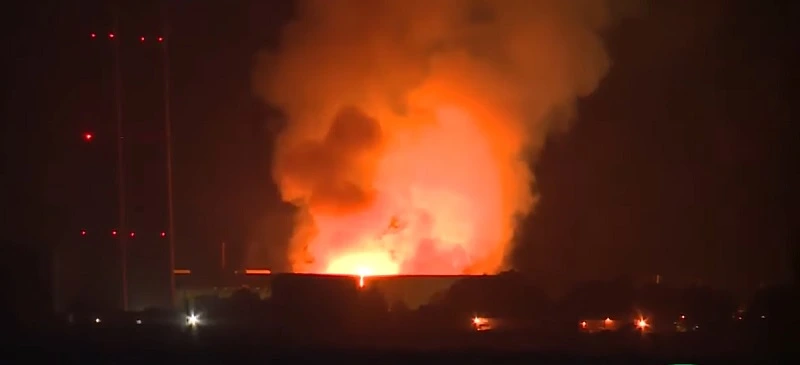
According to preliminary reports from the Monterey County Fire Department, the blaze was fueled by an estimated 400 megawatt-hours of stored energy, making it one of the most significant incidents in energy storage history. “The sheer scale of this facility and the amount of energy stored here present unique challenges in firefighting and containment,” stated Chief Fire Officer Maria Sanchez. “We are coordinating closely with the plant’s operators to ensure the fire is controlled and that no further hazards arise.”
The Monterey County Sheriff’s Office spokesperson confirmed that the fire is not connected to the wildfires in the Los Angeles area, and efforts to contain the blaze are ongoing,
Moss Landing Power Plant Short History
Built in 2020, the Moss Landing facility has been heralded as a pioneer in the transition to renewable energy, featuring 3,000 megawatt-hours following its 2023 expansion. The facility was seen as a critical component in California’s radical extremist green ideology push towards cutting its greenhouse gas emissions. However, the fire has called into question the inherent risks associated with the large-scale deployment of lithium-ion batteries, which have been known to catch fire under certain conditions, particularly when suffering from mechanical failure or thermal runaway.
“While battery storage plays a crucial role in managing supply and demand, we must ensure rigorous safety protocols are in place to mitigate risks,” said Dr. William Chen, an energy policy expert at the University of California, Berkeley. “This incident could potentially prompt regulatory reviews and stricter safety guidelines across the industry.”
Challenges of Lithium Battery Fires: A Growing Concern in Modern Society
Lithium-ion batteries have become indispensable in modern life, powering everything from smartphones and laptops to electric vehicles and renewable energy storage systems. However, they pose a significant safety risk: fires and explosions caused by battery malfunctions. These incidents present unique challenges that affect public safety, manufacturing standards, and emergency response efforts.
Nature of Lithium Battery Fires
Lithium battery fires are not like ordinary fires. When a lithium-ion battery is damaged or experiences a thermal runaway (an uncontrollable rise in temperature due to internal chemical reactions), it can ignite or even explode. This is exacerbated by the presence of flammable electrolytes in the battery, making the flames difficult to extinguish using conventional methods.
Key characteristics include:
- High Heat Intensity: The fire can reach temperatures over 1,000°C.
- Toxic Gases: Combustion releases hazardous gases like hydrogen fluoride (HF), posing health risks.
- Re-ignition Risks: Even after being seemingly extinguished, residual heat can cause the battery to reignite.
Challenges in Firefighting and Safety
The unique properties of lithium battery fires make them especially challenging to address:
- Specialized Suppression Methods: Traditional water or foam is often ineffective. Specialized extinguishers, such as those using dry chemicals or Class D fire suppression agents, are required.
- Delayed Extinguishing Times: Lithium battery fires can take hours to fully extinguish, consuming valuable resources.
- Hazards to First Responders: Toxic fumes and the potential for explosions increase risks to firefighters and rescue personnel.
As fire crews worked to contain the flames, Moss Landing’s operators, LS Power, released a statement expressing their commitment to safety and transparency. “We are cooperating fully with local authorities and emergency services to address this fire and protect both our employees and the surrounding community. The safety of our operations is our top priority,” the statement read.
Environmental and Safety Concerns
In the aftermath of the fire, environmental and safety advocates have voiced their concerns. “This incident serves as a stark reminder of the vulnerabilities inherent in energy storage systems that rely heavily on lithium-ion technology,” warned Elena Rodriguez, director of the Coalition for Renewable Energy Safety. “As we push for more sustainable energy solutions, we must prioritize finding safer alternatives and improving existing technologies.”
A thorough investigation into the cause of the fire is currently underway. The California Public Utilities Commission (CPUC) has announced it will be looking into not only the causes but also the implications for the regulatory framework governing energy storage facilities in the state. “It is imperative that we learn from this incident to enhance safety measures not just at Moss Landing but across all energy storage systems in California,” said CPUC Commissioner Sarah Lee.